New Delhi: Indian Air Force Chief Air Chief Marshal A.P. Singh has said that unmanned aerial systems are transforming modern warfare but cannot completely replace manned fighter aircraft, underlining the continuing importance of human judgement in complex military operations.
Speaking at the India Defence Conclave organised by BharatShakti in New Delhi, Singh rejected the view that future air combat will be dominated entirely by autonomous drones. He said human decision-making would remain critical, particularly when military operations involve rapidly changing situations and sensitive targets.

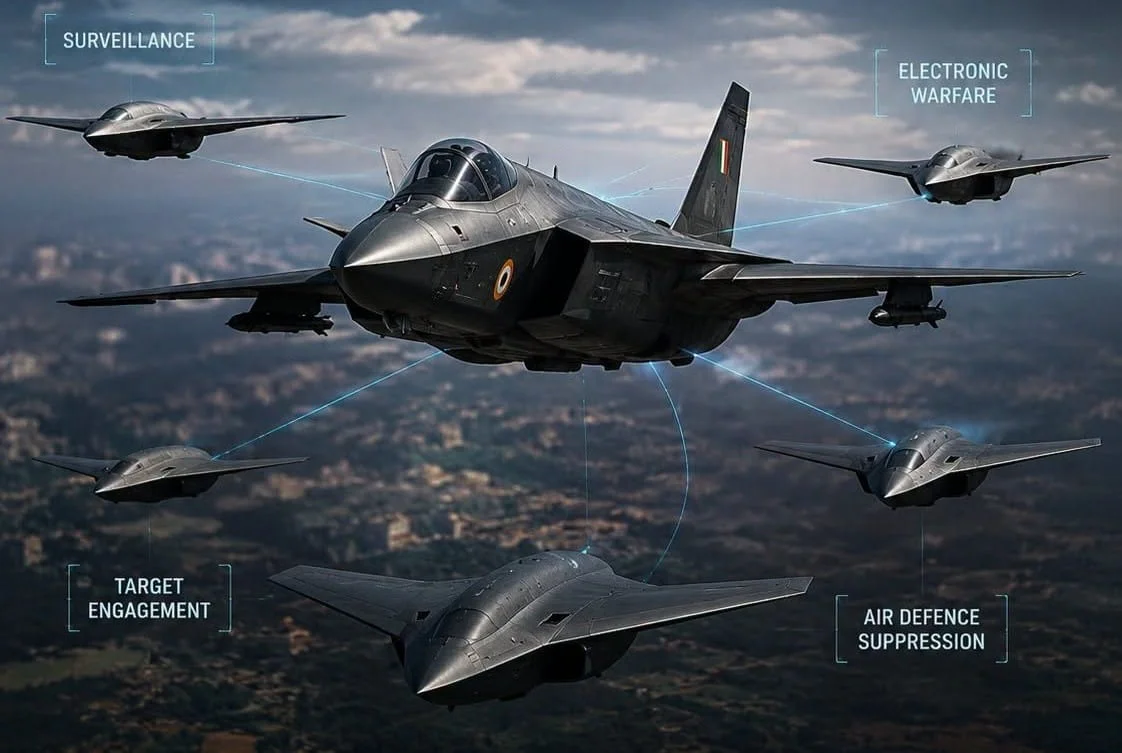
Singh pointed to the growing global focus on manned-unmanned teaming (MUM-T), in which fighter aircraft operated by pilots work alongside autonomous or remotely controlled drones. According to him, major military powers are developing next-generation combat aircraft around this concept, allowing advanced technology to complement rather than replace human expertise.
The Air Chief acknowledged that drones have significantly expanded military capabilities. Unmanned platforms can provide intelligence, surveillance and reconnaissance, create tactical distractions and operate in large numbers as part of swarm formations. However, he cautioned against treating them as a complete substitute for conventional combat aircraft.
He argued that certain missions, particularly those requiring substantial weapons payloads and precise decision-making deep inside hostile territory, still demand platforms with capabilities that current drone technology cannot fully provide.
The discussion also touched upon Operation Sindoor, India’s military response in May 2025. Singh cited the operation while explaining how technology, aircraft and human judgement can work together to achieve military objectives while keeping escalation under control.
According to the Air Chief, the experience demonstrated the importance of selecting the appropriate combination of platforms and weapons for a particular mission rather than depending on a single technology.

Singh also highlighted the emerging concept of future combat aircraft working with autonomous “wingman” drones. Such systems are being explored internationally as part of efforts to combine the decision-making abilities of pilots with the speed, endurance and numerical strength offered by unmanned platforms.
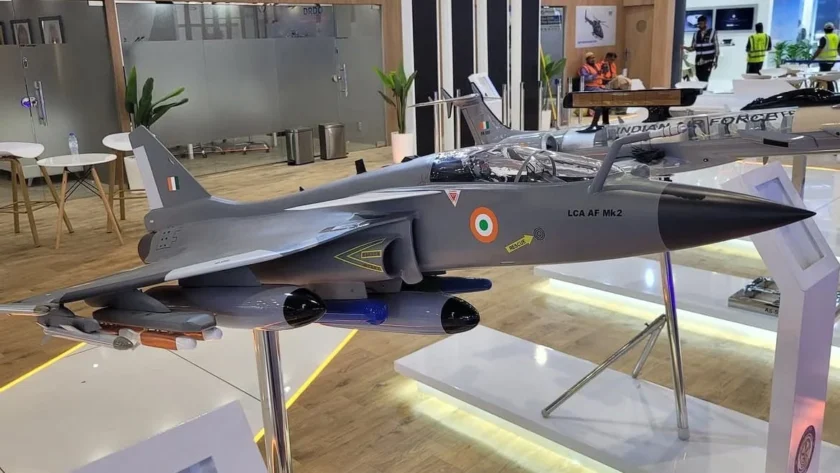
For India, the approach reinforces the strategic importance of developing indigenous advanced fighter aircraft, including the Advanced Medium Combat Aircraft (AMCA) programme. Future variants of the aircraft are expected to incorporate greater levels of artificial intelligence and interoperability with unmanned systems.
Beyond technology, Singh emphasised that military strategy must remain focused on clearly defined objectives. He said achieving a desired outcome and knowing when to bring an operation to an end are equally important aspects of warfare.
He also cautioned against relying on one weapon system for every battlefield requirement. Different operational situations, he explained, require different capabilities, just as different medical conditions require different treatments.
Discussing India’s defence manufacturing ambitions, the IAF Chief expressed confidence in the country’s growing domestic defence ecosystem but called for faster progress. He stressed the need to speed up policy implementation and provide stronger support to private companies and startups developing indigenous military technologies.
Singh’s remarks underline India’s emerging approach to future air warfare: rather than choosing between manned aircraft and autonomous systems, the focus is increasingly on integrating both, with human judgement remaining at the centre of critical combat decisions.







 ---------------------------------------------------------------------------------------------------